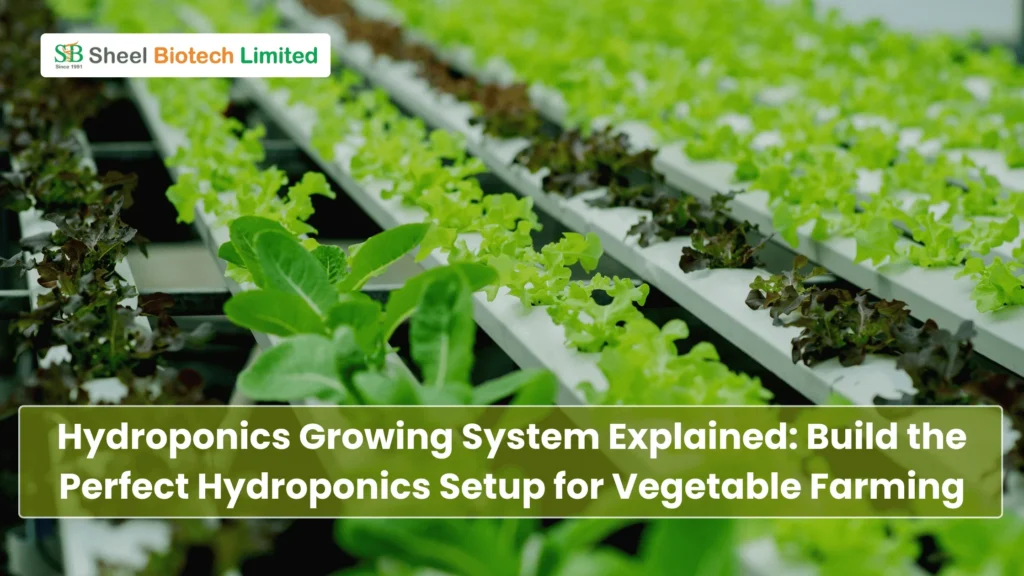
The way we grow vegetables is changing. With increasing challenges like limited agricultural land, changing weather patterns, and the growing demand for fresh produce, farmers are exploring smarter and more efficient farming methods. Modern agricultural technologies are helping growers achieve better production while using fewer natural resources.
Among these innovative techniques, hydroponics farming has gained significant popularity. It allows plants to grow without soil by supplying essential nutrients directly through water. This method gives farmers better control over plant growth and creates new opportunities for commercial vegetable production.
A properly designed hydroponics growing system helps farmers produce healthy vegetables with efficient water usage, better space management, and consistent quality. From small urban farms to large commercial projects, hydroponics is becoming an important part of the future of sustainable agriculture.
What is a Hydroponics Growing System?
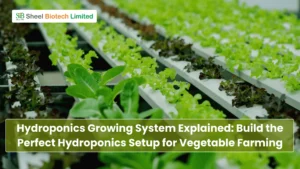
A hydroponics growing system is a modern farming technique where plants are cultivated without soil. Instead of receiving nutrients from soil, plants get essential minerals through a nutrient-rich water solution.
In traditional farming, plant roots need to search through soil for water and nutrients. In hydroponics, nutrients are directly provided to the roots in a controlled environment, allowing plants to focus more on growth and production.
By maintaining the right balance of nutrients, water, oxygen, light, and temperature, hydroponics systems create ideal conditions for healthy plant development.
Benefits of Hydroponics for Vegetable Farming
Efficient Water Usage
One of the biggest advantages of hydroponics is reduced water consumption. These systems deliver water directly to plant roots and can recycle unused water, making them much more efficient than conventional farming methods.
This makes hydroponics suitable for regions where water conservation is a major concern.
Higher Production in Limited Space
With decreasing availability of agricultural land, space-efficient farming solutions are becoming more important. Hydroponics allows growers to cultivate vegetables in smaller areas such as rooftops, greenhouses, and urban farms.
With proper planning and management, farmers can achieve higher productivity from limited spaces.
Better Control Over Crop Growth
Hydroponics provides better control over important factors like nutrient levels, pH balance, water supply, and growing conditions. This controlled environment helps improve crop quality and provides more consistent production.
Year-Round Vegetable Cultivation
Unlike traditional farming, which is highly dependent on seasons and weather conditions, hydroponics combined with protected cultivation allows farmers to grow vegetables throughout the year.
This helps growers maintain regular production and meet increasing market demand.
Types of Hydroponics Systems
Different crops require different hydroponics methods. Some commonly used systems include:
Nutrient Film Technique (NFT):
In this system, a thin layer of nutrient-rich water continuously flows over plant roots. It is widely used for leafy vegetables like lettuce and herbs.
Deep Water Culture (DWC):
Here, plant roots remain suspended in nutrient-rich water while receiving oxygen through air pumps. It is simple, effective, and suitable for beginners.
Drip Hydroponics:
This system supplies nutrients directly to each plant through drip lines. It is commonly used in commercial farming due to its precise nutrient management.
Aeroponics:
An advanced method where plant roots are suspended in air and supplied with nutrients through a fine mist.
Building the Right Hydroponics Setup
A successful hydroponics setup requires proper planning and technical understanding. The location should have access to quality water, electricity, ventilation, and suitable environmental conditions.
Crop selection is also important. Vegetables like lettuce, spinach, herbs, tomatoes, cucumbers, and strawberries can be grown using different hydroponics techniques depending on the system design.
Regular monitoring of nutrient levels, water quality, and plant health is essential to achieve better results.
How Sheel Biotech Supports Hydroponics Farming
With more than three decades of experience in agriculture, biotechnology, and protected cultivation, Sheel Biotech Ltd. is helping farmers and entrepreneurs adopt modern farming solutions.
Established in 1991, Sheel Biotech works in areas including greenhouse technology, hydroponics solutions, biotechnology, turnkey agricultural projects, and sustainable farming practices.
The company provides complete support for modern farming projects, including planning, infrastructure development, technology selection, and technical guidance. Through its expertise, Sheel Biotech helps growers build efficient and productive farming systems.
Interested in setting up a commercial hydroponics farm or want to know more about the right hydroponics setup for your farming goals? Connect with Sheel Biotech on WhatsApp to explore complete solutions, from planning and infrastructure to technology support and execution.
Conclusion
A hydroponics growing system is transforming vegetable farming by making agriculture more efficient, sustainable, and technology-driven. By saving water, reducing space requirements, and providing better control over crop growth, hydroponics offers a promising solution for the future of farming.
With the right planning and expert support from organizations like Sheel Biotech, farmers and businesses can successfully adopt hydroponics and move towards a smarter agricultural future.
Connect With Us
Let Sheel Biotech be your partner in success.